
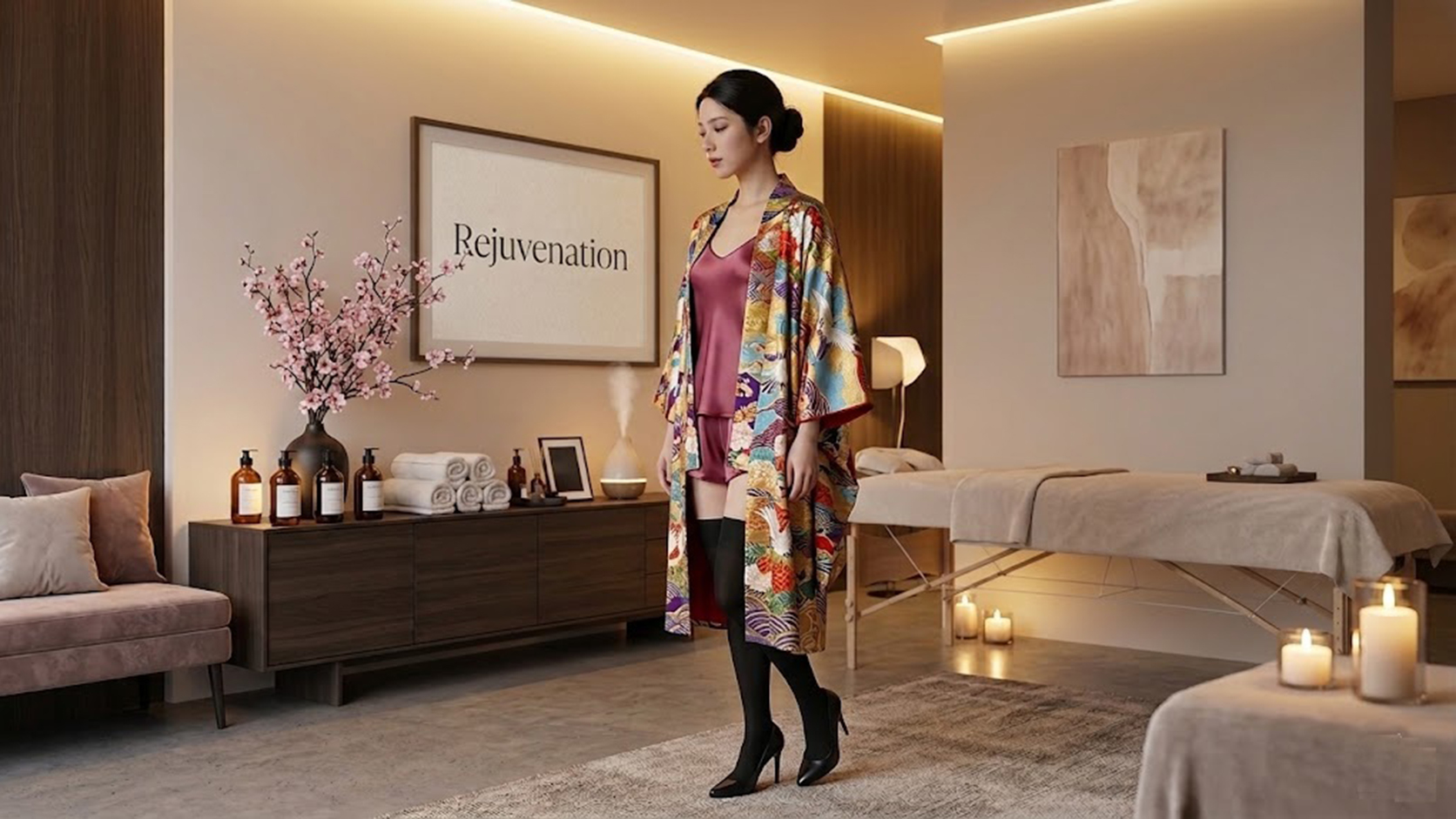
Japanese massage – everything is for your rejuvenation
Japanese massage has evolved into a refined art of rejuvenation, offering far more than physical relief. At its core is a philosophy: everything in the experience is designed to guide you gently from relaxation into a state of inner emptiness, where thoughts, emotions, and even the sense of self can momentarily dissolve. This quiet surrender is not about losing yourself but about rediscovering the calm that exists beneath the noise of daily life.
Rooted in traditional Japanese manual techniques, this therapy relies on subtle, deliberate interaction between the therapist’s hands and customer’s skin, muscles, tissues and nervous system. The touch is soft yet intentional, creating a dialogue between pressure, warmth, and response. Through these carefully orchestrated movements, the body undergoes a physical transformation—muscles loosen, circulation improves, and tension melts away. At the same time, the nervous system shifts into a calmer state, allowing the mind to settle. This dual process refines both body and spirit, guiding you toward a peaceful, rebalanced state.


What sets this approach apart is its devotion to serving both body and soul with equal care. It is crafted for those who wish to reclaim their vitality not through force, but through gentle awakening. The deeper invitation is to listen to your inner self—the part of you untouched by expectations, roles, or obligations. True rejuvenation begins when you honour that quiet voice.
In this sense, the technique is only the vessel. The real transformation comes from the resonance it creates within you, a kind of personal “Renaissance” where your energy, clarity, and sense of self are renewed. Japanese massage becomes not just a treatment, but a pathway back to your own vitality, presence, and inner harmony.
it would be great if you run to the suburb from noisy Manchester City Centre and have your own spare time lifestyle for a professional, pleasant and perfect Japanese massage.
Hi, sinner man, where you gonna run to when the city feels overwhelming, the sea was boiling and the rock was melting? It’s the right moment to escape the noise of Manchester’s busy centre and retreat to the calm of the suburbs. There, you can reclaim your own rhythm and indulge in a professional, pleasant, and perfectly tailored Japanese massage that restores balance to both body and mind.

Japanese Nuru massage
Anyumi is a student in University of Manchester. She began her career in a Korean massage parlour in Oldham, where she learned the foundations of therapeutic touch and the discipline required in traditional bodywork. Over time, she discovered that different massage styles offered different forms of expression, each with its own rhythm and intention. When she was introduced to Nuru massage, she found it unexpectedly playful and creatively engaging. The use of the smooth, slippery gel required a new level of focus, balance, and body awareness, turning each session into a flowing, almost dance‑like interaction.
What surprised her most was how this technique awakened a deeper sense of connection to her work. The fluidity, the movement, and the emphasis on full‑body engagement made her feel more present, more attuned, and more expressive as a therapist. For Anyumi, Nuru massage became not just a skill, but a form of personal and professional renewal.

Japanese Sensual massage
During Japanese sensuality massage traditions, one of the most distinctive principles is the emphasis on synchrony. From the moment the session begins—during preparation, breathing alignment, and the gradual transition into full relaxation—the practitioner aims to match the client’s pace, rhythm, and emotional state. This harmony is not simply a technique; it is a philosophy. The goal is to create a shared flow in which both individuals move with the same intention and presence.
In many forms of Japanese bodywork, the relationship is not viewed as “therapist and client” in the Western sense, nor is it framed as a personal bond like that between partners. Instead, the guiding idea is unity. For the duration of the session, the two are understood as one body, one breath, and one moment of awareness. This concept can feel surprising—even astonishing—to those unfamiliar with Eastern healing traditions.
Michael, a middle-aged officer who jokingly introduced himself as the “Big Bad Wolf,” once told me that he could easily distinguish between different levels of Asian escort services. According to him, one indicator is that many women appear distracted by other things while providing their services. In contrast, he said that I am fully present with him from beginning to end, both physically and emotionally, just like one person. That, he explained, is why every two weeks he makes the 20-minute drive from Ashton-under-Lyne specifically to see me.
To Western perspectives, which often emphasise individuality and boundaries, the notion of merging energies may seem abstract. Yet in Japanese philosophy, this temporary unity is what allows deep relaxation, emotional release, and a sense of inner quiet to emerge. It is less about technique and more about entering a shared state of calm where both mind and body can reset, reconnect, and renew.